Tag: yurts

  • Yurts vs Tiny Homes Australia: Complete 2025 Comparison

    Yurts vs Tiny Homes Australia: Complete 2025 Comparison

    With housing costs continuing to rise across Australia, more people are exploring alternative housing options that offer affordability, sustainability, and lifestyle freedom. Two options that frequently come up in these conversations are yurts and tiny homes – but which one actually makes sense for your situation?

    This comprehensive comparison examines the real costs, practical considerations, and lifestyle implications of choosing between yurts and tiny homes in Australia. We’ll cut through the marketing hype to give you the honest information you need to make an informed decision based on your budget, goals, and circumstances.

    Quick Comparison: Yurts vs Tiny Homes Australia

    Factor Yurts Tiny Homes
    Initial Cost $11,000 – $15,500 $80,000 – $200,000+
    Setup Time 2-3 weeks (including deck) 3-12 months
    Mobility Moderate (few days to move) Most are on wheels
    Durability 15-20 years 20-30+ years
    Floor Space 20-80 sqm 15-40 sqm
    Climate Control Good with heating/cooling Excellent insulation
    Utilities Connection Simple off-grid setup Complex installation
    Regulatory Status Temporary/camping structure Legitimate housing option
    Glamping Potential Excellent Good

    This table provides a snapshot of the fundamental differences, but the reality is more nuanced. Each option excels in different areas, and the best choice depends heavily on your specific circumstances, budget, and preferences.

    What Are Yurts? Understanding Australia’s Portable Alternative

    Yurts are circular, portable dwellings that originated over 3,000 years ago on the steppes of Central Asia. These structures were designed by nomadic peoples who needed portable shelters that could withstand harsh weather conditions while remaining completely mobile. Today’s modern yurts have evolved from their traditional felt-and-wood ancestors, incorporating contemporary materials and design principles adapted for Australian conditions.

    A modern yurt consists of a circular lattice wall framework, typically made from treated timber, topped with a compression ring called a crown or wheel. Radial rafters connect the wall to the crown, creating the distinctive domed roof profile. This design distributes weight evenly around the perimeter, allowing yurts to withstand good wind loads when properly anchored.

    The covering system has been adapted for Australian conditions, featuring multi-layer systems designed to handle various climates. The typical covering consists of an inner decorative fabric layer, insulation material, and an outer weatherproof membrane made from durable double-coated PVC materials.

    What makes yurts particularly appealing to many Australians is their simplicity and speed of installation. Unlike conventional buildings, yurts can be assembled by 2-4 people in just 2-3 days using basic tools and following comprehensive instructions. This accessibility makes them attractive for people seeking immediate accommodation solutions without the complexity and cost of traditional construction.

    However, it’s important to understand that yurts exist in a regulatory grey area in Australia. They’re not built to Australian building standards and aren’t certified as permanent dwellings. Think of them more like a high-quality camping structure – similar to setting up a large tent or marquee on your property. Many of our clients live in their yurts successfully, but typically in rural areas with less scrutiny and understanding that they’re operating outside conventional housing regulations.

    What Are Tiny Homes? Australia’s Growing Housing Alternative

    Tiny homes represent a modern architectural movement that prioritizes efficient design, sustainability, and financial freedom over traditional concepts of space and ownership. Unlike yurts, which exist in regulatory grey areas, tiny homes can be legitimate housing options when properly designed and approved, making them a more conventional alternative to traditional housing.

    The defining characteristic of a tiny home is not just its size—typically ranging from 15 to 40 square meters—but its approach to maximizing functionality within minimal space. Australian tiny homes are engineered structures that incorporate all the systems and amenities of traditional homes, including full kitchens, bathrooms, sleeping areas, and living spaces, but designed with precision efficiency that eliminates wasted space.

    Construction methods for tiny homes mirror traditional building practices but on a smaller scale. Most Australian tiny homes are built using conventional framing, insulation, and cladding materials. This conventional construction approach means tiny homes can achieve excellent thermal performance and durability, often exceeding the lifespan of alternative housing options like yurts.

    The tiny home movement in Australia has gained legitimacy through proper building standards and approval processes. When built to Australian building codes and properly approved by local councils, tiny homes can serve as primary residences, granny flats, or rental properties. This regulatory acceptance provides additional security, though yurts can also achieve approvals for specific purposes such as glamping accommodation or temporary structures.

    Cost Comparison: The Real Financial Picture

    $11K-$15.5K
    Yurt Complete Cost

    $80K-$200K+
    Tiny Home Cost

    2-3 weeks
    Yurt Setup Time

    3-12 months
    Tiny Home Build

    Understanding the true cost of yurts versus tiny homes requires examining not just the initial purchase price, but the complete financial picture including setup, ongoing maintenance, insurance, and potential return on investment. Based on current Australian market data and real customer experiences, the cost differences are substantial and often decisive in the selection process.

    Initial Purchase Costs

    The biggest difference between yurts and tiny homes lies in their upfront costs. Quality yurts suitable for Australian conditions typically range from $11,000 for a basic 4.5-meter model to $15,500 for a premium 8-meter yurt with full customization options. These prices include the complete structural system, covering materials, and basic hardware required for assembly.

    In contrast, tiny homes represent a significantly larger initial investment. Professional tiny home builders in Australia typically charge between $80,000 and $150,000 for a standard build, with luxury models reaching $200,000 or more. Even DIY tiny home projects, when accounting for materials, tools, and time investment, rarely come in under $60,000 for a quality build that meets building standards.

    Return on Investment for Glamping Business

    For those considering glamping business opportunities, the cost differences become even more significant. A yurt can begin generating income within weeks of installation, with many operators achieving $200-300+ per night rates. The lower initial investment means faster payback periods, typically 2-3 years for successful operations.

    Tiny homes, while commanding premium rates of $200-400 per night, require much longer to recover the initial investment. The higher build quality and legal certainty can justify premium pricing, but payback periods typically extend to 4-6 years, assuming consistent bookings and proper approvals for commercial use.

    Lifestyle Differences: Living Experience Comparison

    Space Design and Layout Philosophy

    Yurts embrace an open-plan philosophy that reflects their nomadic heritage. The circular design creates a naturally flowing space without corners or defined rooms, promoting a sense of openness and connection with the environment. This layout works exceptionally well for individuals or couples who appreciate minimalist living and don’t require strict separation between functional areas.

    The open design of yurts encourages creative furniture arrangement and multi-purpose use of space. Many yurt dwellers develop innovative solutions for privacy, such as hanging curtains, using moveable screens, or installing partition walls to create defined areas when needed. Larger yurts can also accommodate loft bedrooms, maximizing floor space while providing private sleeping areas. The central crown provides natural light and ventilation, creating a bright, airy atmosphere that many residents find psychologically uplifting.

    Tiny homes, conversely, maximize functionality through precise space planning and defined areas. Despite their small footprint, well-designed tiny homes can feel surprisingly spacious due to clever use of vertical space, built-in storage, and multi-functional furniture. The rectangular layout allows for clear separation between sleeping, living, cooking, and bathroom areas, which many people find more comfortable and familiar.

    Climate Control and Comfort

    Australia’s diverse climate zones present unique challenges for alternative housing, and yurts and tiny homes respond differently to these conditions. Yurts handle moderate climates well and their natural ventilation makes them comfortable in warm weather without mechanical cooling. In colder climates, yurts can be effectively heated with wood fires, diesel heaters, or split systems, though the larger internal volume may require more energy than tiny homes to maintain consistent temperatures.

    Tiny homes, with their conventional insulation and construction methods, typically offer superior climate control. Proper insulation, sealed construction, and efficient HVAC systems can maintain comfortable temperatures year-round with relatively low energy consumption. This makes tiny homes more suitable for extreme climates or for people who prioritize consistent indoor comfort.

    Regulatory Reality Check: The Truth About Alternative Housing in Australia

    The Yurt Reality: Navigating Approvals and Regulations

    While yurts exist in a regulatory grey area for permanent housing, there are several pathways for legitimate use in Australia. Yurts are not built to Australian building standards for permanent dwellings, but they can achieve approvals for specific purposes.

    Many of our clients have successfully obtained council approvals for yurts used as glamping accommodation, where they’re classified as “glamping tents” or camping structures. We’re actively working to streamline this approval process for our clients interested in accommodation businesses.

    For personal use, many clients have obtained council exemptions by having their yurts classified as “tents” for purposes like yoga studios, art spaces, or temporary accommodation. Some clients are exploring permits under regulations that allow temporary accommodation for up to 2 years – these provisions exist across various Australian states and can provide legitimate pathways for yurt living during specific circumstances.

    The key to successful yurt installation is understanding your local council’s approach and working within appropriate frameworks. Rural properties with understanding neighbors and minimal oversight remain the easiest path, but legitimate approval options are expanding as councils become more familiar with alternative structures.

    Tiny Homes: Legitimate but Complex

    Tiny homes offer a more straightforward regulatory path when properly designed and approved. Australian building codes can accommodate tiny homes when they meet specific requirements for structural integrity, fire safety, and utility connections. However, the approval process can be complex and expensive, requiring engineering certifications, building permits, and compliance inspections.

    The regulatory advantage of tiny homes lies in their potential for legitimate approval as primary residences, secondary dwellings, or commercial accommodation. This legitimacy provides security and peace of mind, but comes with the responsibility of meeting all applicable building standards and ongoing compliance requirements.

    Practical Considerations

    Maintenance Requirements

    Yurts require regular inspection of covering materials, hardware tightening, and seasonal adjustments. Most maintenance can be performed by owners with basic tools.

    Insurance Considerations

    Insurance considerations differ between the two options. Standard home insurance policies typically don’t cover yurts, requiring specialized coverage.

    Utility Connections

    Yurts excel with simple off-grid systems, while tiny homes can integrate with standard utilities but require more complex installation.

    Resale Value

    Tiny homes generally maintain better resale value due to their conventional construction, while yurts depreciate more like recreational vehicles.

    Conclusion: Making the Right Choice for Your Australian Alternative Housing Journey

    The choice between yurts and tiny homes in Australia ultimately comes down to your budget, lifestyle preferences, and housing goals. Both offer viable alternatives to conventional housing, each with distinct advantages.

    Yurts excel as accessible entry points into alternative living, offering excellent value for money, quick deployment, and flexibility. With prices starting from $11,000 and setup possible within 2-3 weeks including deck construction, they’re achievable for a broader range of Australians. Whether you’re creating a personal retreat, art studio, or glamping business, yurts provide a practical solution that can generate $200-300+ per night in tourism applications.

    Tiny homes provide a more conventional living experience with superior durability and climate control, but require significantly higher investment ($80,000-200,000+) and longer construction timelines. They’re ideal for those who prioritize conventional amenities and want the security of building code compliance.

    For many Australians seeking alternative housing solutions, yurts represent the perfect balance of affordability, functionality, and lifestyle freedom. With growing acceptance from councils for various applications – from glamping accommodation to personal studios – and our ongoing work to streamline approval processes, yurts are becoming an increasingly viable option for those ready to think outside the conventional housing box.

    Explore Glamping Business Guide
    Learn More About Yurts

    Ready to explore your alternative housing options? Contact Yurt in the Dirt today to discuss how yurts or geo domes might fit your lifestyle and budget. Our experienced team can provide personalized advice, current pricing, and guidance through the entire process from planning to installation.
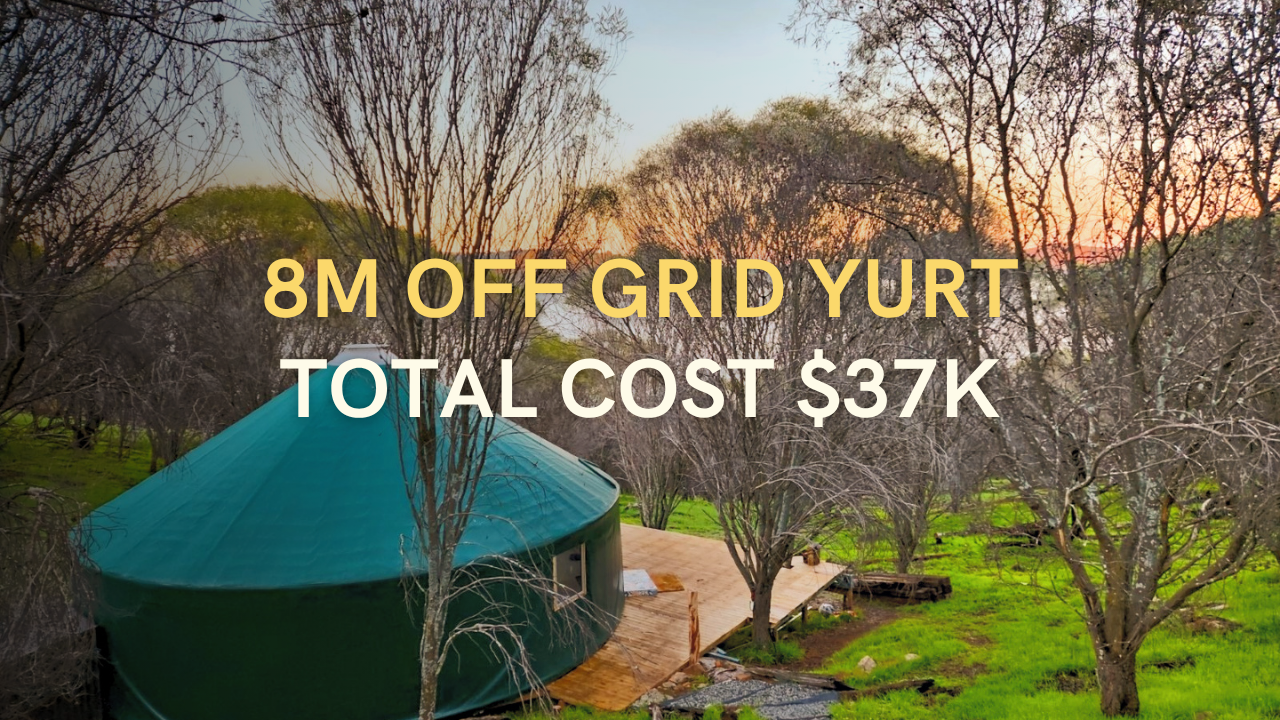
  • Dave’s Epic 8m Yurt Build: From Vision to Off-Grid Paradise in WA

    Dave’s Epic 8m Yurt Build: From Vision to Off-Grid Paradise in WA

    Dave’s 8m Yurt Build Vision

    Dave reached out to us with a clear vision for his 8m yurt build. He wanted to create a versatile space that could serve as off-grid accommodation on his rural property without the hassle and cost of a traditional building. We worked together to figure out the perfect size and features for his 8m yurt, and Dave was ready to get started on his dream weekend retreat.

    What makes Dave’s yurt build special isn’t just the end result – it’s how he approached the entire project. Instead of waiting months for contractors and watching costs spiral, Dave chose to think outside the box and create something incredible with his own hands using our DIY yurt system.

    8m
    Yurt Diameter
    2-3
    Weeks Total Build
    $37K
    Total Investment
    100%
    Off-Grid

    Smart Alternative to Traditional Building

    Instead of going down the traditional building route that would’ve cost him upwards of $150,000 and taken the better part of a year, Dave’s 8m yurt build gave him everything he needed at a fraction of the cost and time. This approach to alternative housing solutions is becoming increasingly popular across Australia.

    Traditional Build Route Dave’s 8m Yurt Build Solution
    12+ months of planning and construction 2-3 weeks total build with friends and family
    $150,000+ investment $37,000 total cost
    Months waiting for council approvals Classed as a ‘temporary structure’
    Permanent structure, can’t be moved Relocatable if plans change
    Dependent on contractors’ schedules DIY-friendly with some helping hands
    High ongoing maintenance costs Simple, low-maintenance design

    Watch Dave’s Complete 8m Yurt Build Story

    🎥 See Dave’s incredible 8m yurt build transformation from start to finish!
    This video showcases the mezzanine bedroom, full bathroom, kitchen setup, and amazing solar system that powers everything off-grid.
    ▶ Watch: 8M YURT MEZZANINE – Dave’s Off-Grid Paradise

    Dave takes you through every detail of his 8m yurt build, from the wrap-around deck to the stargazing bedroom under the dome skylight. You’ll see exactly how he achieved luxury off-grid living for just $37,000.

    DIY Decking Foundation for 8m Yurt Build

    Dave constructed his own platform to support the 8m yurt. The main deck is raised slightly to ensure the outer cover remains 100% waterproof – essential for the WA climate. He also added a wrap-around deck for extra outdoor space, perfect for those sunny Western Australian days.

    This foundation approach not only provides excellent protection for the yurt structure but also creates additional living space that seamlessly connects the indoor and outdoor areas. For more information on yurt foundation options, check our comprehensive guides.

    8m Yurt Interior Transformation

    Inside, Dave built an incredible mezzanine with staircase leading up to the main bedroom, allowing them to sleep under the stars beneath the large clear dome skylight. This design massively increased the usable space of the 8m yurt build and allowed them to build a fully enclosed bathroom underneath.

    Mezzanine Bedroom

    Complete with staircase access and positioned directly under the dome skylight for stargazing from bed

    Full Bathroom

    Located underneath the mezzanine with full-sized shower, vanity, and composting toilet

    Generous Kitchen

    Full-sized fridge, sink, induction cooktop and plenty of cupboard space for all cooking needs

    Study & Lounge Areas

    Dedicated spaces for work and relaxation, all efficiently designed within the 8m diameter

    All of this functionality fits within an 8m yurt diameter – a testament to thoughtful design and efficient use of space. This demonstrates why the 8m size is perfect for off-grid accommodation projects.

    Off-Grid Solar Setup for 8m Yurt Build

    Dave’s solar setup ensures complete energy independence for his 8m yurt build. The system includes a 3000W solar bank feeding into a Bluetti unit with a 300AH battery and a 5000W inverter.

    This setup provides more than enough power for all modern conveniences. When the local town experiences power outages, Dave’s off-grid yurt continues running all appliances without interruption.

    3000W Solar Bank

    Sufficient generation capacity for all daily power needs, even during cloudy periods

    300AH Battery Storage

    Ample stored power to maintain all systems through the night and extended cloudy weather

    5000W Inverter

    Handles high-draw appliances including the induction cooktop and full-sized refrigerator

    Bluetti Control System

    Smart management technology that optimizes power distribution and battery life

    Complete 8m Yurt Build Cost Breakdown

    Dave has been transparent about his yurt build cost, providing a complete breakdown of what it took to create this off-grid retreat. This detailed 8m yurt build cost analysis helps others planning similar projects.

    8m Yurt and Extra Windows

    $16,500

    Complete 8m yurt kit with additional windows for enhanced natural light

    Decking Materials

    $8,000

    Platform construction and wrap-around deck materials

    Interior Fitout

    $5,000

    Mezzanine construction, bathroom, kitchen, and all internal fixtures

    Solar Setup

    $5,000

    Complete off-grid power system with battery storage and management

    Miscellaneous

    $2,500

    Tools, hardware, and finishing materials

    Total 8m Yurt Build Cost

    $37,000

    Complete off-grid accommodation ready for use

    8m Yurt Build Value Comparison

    $37,000 represents exceptional value compared to traditional building costs. A conventional build with similar features would cost well over $150,000 and take 12+ months to complete. Dave achieved his vision in just 2-3 weeks with friends and family.

    What Dave Says About His 8m Yurt Build

    “We are so thrilled with our 8m yurt. We cannot believe how spacious it is. Dealing with Ryan has been such a pleasure, great to see that old fashioned service is still alive. What a great product and so well priced. We had friends and family over two days to build the entire yurt following the build video.”

    – Dave, Western Australia

    Dave’s experience highlights several key advantages of our 8m yurt build approach: the surprising spaciousness of the design, the quality of customer service, excellent value for money, and the community aspect of the build process.

    Having friends and family involved in creating your space creates lasting memories and a sense of shared accomplishment that’s impossible to achieve with traditional construction methods. This is why many of our client build stories feature community involvement.

    Frequently Asked Questions About 8m Yurt Builds

    How much does an 8m yurt cost to build?

    Dave’s complete 8m yurt build cost was $37,000 including the yurt kit ($16,500), decking ($8,000), interior fitout ($5,000), solar setup ($5,000), and miscellaneous materials ($2,500). This represents exceptional value compared to traditional building costs of $150,000+.

    How long does it take to build an 8m yurt?

    Dave completed his 8m yurt build in 2-3 weeks total with friends and family helping during weekends. The actual yurt assembly can be completed in 2-3 days, with additional time needed for foundation preparation and interior fitout.

    Do you need council approval for a yurt in Australia?

    Yurts are often classed as ‘temporary structures’ which may have different approval requirements than permanent buildings. Check with your local council for specific regulations in your area, as requirements vary between councils.

    What size yurt is best for off-grid living?

    An 8m yurt provides excellent space for off-grid living, offering approximately 50 square meters of floor space. This size allows for separate sleeping, living, kitchen, and bathroom areas while remaining cost-effective and manageable for DIY construction.

    Ready to Start Your Own 8m Yurt Build?

    Join our growing community of clients who’ve built something incredible with our 8m yurts and domes. Get started with our Ultimate Buyer’s Guide and unlock your $500 discount.

    Get the Ultimate Buyer’s Guide & $500 Discount Call Ryan: 0489 269 088

    Think your property could use an 8m yurt?
    Get in touch today and let’s start planning your yurt build.

    n –>

  • Types Of Glamping Tents and How They Compare To Yurts and Geo Domes

    Types Of Glamping Tents and How They Compare To Yurts and Geo Domes

    Camping is great, but let’s face it: pitching a tent and sleeping on the ground isn’t everyone’s cup of tea. Enter glamping – a fusion of glamour and camping. Whether you’re a nature enthusiast or just love the idea of sleeping under the stars without giving up creature comforts, there’s a glamping tent for you. Let’s dive into the most popular types of glamping tents as well as what we offer at Yurt in the Dirt 😉

    Yurts

    $11000
    Purchase Now

    4.5 Metre Yurt

    Perfect for a small family getaway or as a guest room in your backyard.

    $12000
    Purchase Now

    5 Metre Yurt

    Ideal for couples seeking a cozy, yet spacious retreat.

    $13500
    Purchase Now

    6.3 Metre Yurt

    Great for a family vacation or a spacious garden studio.

    $15500
    Purchase Now

    8 Metre Yurt

    Perfect for hosting events, workshops, or large family gatherings.

    1 / 5

    For context…Yurts are like the granddaddy of glamping tents – Originating from Mongolia, these round nomadic structures are spacious and sturdy. With their lattice walls and wooden rafters, yurts provide a rustic yet comfortable experience.

    Our yurts have come a long way from the old days of nomadic tents, we have adapted them to our modern standards with these unique features:

    • Durable Cover: Double-coated PVC outer cover that is fully waterproof, UV-resistant, and ideal for harsh Australian & NZ conditions.
    • Robust Frame: Combination of bamboo lattice and aluminum wall frames, with pine roof rafters for enhanced strength and flexibility.
    • Natural Light: Clear polycarbonate dome skylight and small cantilever windows for plenty of natural light.
    • Efficient Ventilation: Whirlybird-style ventilation ensures excellent airflow and expels hot air and condensation.
    • Double Entry Door: Fir wood double door with fixed glass panels, including a lock and keys for added security.
    • Effective Insulation: Felt insulation between the inner lining and outer cover keeps the yurt comfortable in all weather conditions.
    • Beautiful Interior: Light-colored patterned fabric liner creates a warm ambiance.
    • Complete Installation Kit: Includes all necessary fixings and an anchor kit for secure setup. Shipping to the nearest port is also included.
    • Optional extras like additional windows, extra doors, and connecting frames for joining 2 or more are available to customize your yurt.

    We started this business whilst living in our own 8m yurt with a family of 4, and I can tell you it’s one of the best decisions we ever made. It’s such a unique form of alternative accommodation and our kids love adventure and the simple life (mind you, we live in Denmark, WA so it comes pretty naturally down here). If you want to learn more about how our yurts are different from conventional yurts you might find from other suppliers, check out our range of options here.

    Geo domes

    $10500
    Purchase Now

    5 Metre Geodome

    Perfect for a cozy retreat with a stunning view of the night sky.

    $12500
    Purchase Now

    6 Metre Geodome

    Ideal for a family getaway or a spacious glamping experience.

    $14500
    Purchase Now

    8 Metre Geodome

    Perfect for hosting events or enjoying a luxurious glamping experience.

    1 / 5

    Geodomes are the futuristic cousins of yurts – also one of our core product offerings. These spherical structures are made from a network of triangles, creating an incredibly strong and weather-resistant structure.

    Our Geo Domes offer unique features that make them superior to cheaper alternatives:

    1. Geo-Dome cover: Durable, waterproof, UV-resistant double coated PVC (850gsm) in your choice of colour. Ideal for harsh Australian conditions, designed to last 7 – 10 years before replacement.
    2. Frame structure: Hot-dip galvanised steel. This is a sturdy frame with high wind load capacity.
    3. Insulated Canvas interior lining: This is a premium lining in your choice of colour, easy to clean and durable. Backed with aluminium air cell insulation.
    4. Double glazed front door: Frosted glass door and aluminium frame.
    5. Skylight: For natural light and a view of the night sky. (you can shade the skylight with the insulated canvas if desired in summer)
    6. Large panoramic window: This is the clear section covering approximately 1/3 of the dome.
    7. Round glass windows x 2: 600mm glass windows which open fully to allow fresh air into your space. Extra windows optional.
    8. Solar ventilation fan: Circulates air through the interior and draws hot air out, does not require separate power.
    9. Tailored window curtains: Specially designed curtain in your choice of colour to fit your panoramic window.
    10. Smart lock keypad: Convenient way to lock your Geo-Dome and allow keyless entry for guests. (standard lock also available)
    11. Cover tensioning system: For a tight fit and a high-quality installation.
    12. Hardware and fixings: To install and secure your Geo-Dome onto a solid base. (base not included however speak to us about our decking plans and design advice)
    13. Shipping and handling: Shipping to your nearest port is included (Perth, Sydney, Melbourne, Adelaide, Brisbane and most NZ ports) however final delivery will be an additional cost (we will arrange on your behalf) or you may collect from the port warehouse with a suitable trailer or own courier. We also service Tasmania but the destination port is Melbourne. International orders can also be arranged.

    Staying in a geodome feels like a sci-fi movie. Imagine lying in bed and watching the stars through the clear panoramic window – pure magic! Here’s a video of one of my customers, Stu, and what he’s done with his 6m Geo Dome.

    Center YouTube Video

    Like I said, magic! Explore our range of geodomes for your next adventure.

    Safari Tents

    Safari Tent

    Safari tents bring the African safari experience to your doorstep. These canvas tents are spacious and often come with wooden floors and en-suite bathrooms.

    • Features:
      • Luxury amenities: Often equipped with beds, furniture, and bathrooms.
      • Durable canvas: Tough enough to handle the elements.
      • Spacious layout: Plenty of room for a comfortable stay.

    My wife and I stayed in a Safari Tent in the Wheatbelt in WA once on holiday. It actually featured a fully stocked minibar, a cozy bed, and even a clawfoot bathtub – fancy, much? Regardless, it was a fantastic form of alternative accommodation which allowed you to still experience an authentic “tenting” experience while also giving you the comfort of having a bed and other amenities.

    While undeniably luxurious, safari tents can be costly and less durable in adverse weather compared to yurts or geodomes. Yurts, offered by us at Yurt in the Dirt, provide robust insulation and durability at an affordable price, making them a practical choice for various climates.

    Bell Tents

    Bell Tent Glamping

    Bell tents are the classic glamping choice. Their simple, elegant design makes them a favorite for festivals and retreats.

    • Features:
      • Elegant shape: The conical design is both aesthetic and practical.
      • Easy setup: Can be pitched quickly.
      • Versatile: Great for both solo travelers and families.

    Bell tents are wonderfully whimsical and easy to set up, making them ideal for short stays and festivals. However, for those looking for longer-term durability and extra space, Geo Domes from might be a better option. Geo Domes offer unique structural strength and the ability to withstand harsher elements, which bell tents may struggle with.

    Teepees

    Teepees, or tipis, bring a touch of Native American culture to the glamping experience. These cone-shaped tents are spacious and airy.

    • Features:
      • Cultural charm: Rich in history and tradition.
      • Ventilation: Excellent airflow keeps it cool.
      • Spacious: You can get huge teepees ideal for group stays.

    While teepees offer a distinctive experience with excellent ventilation and space and are perfect for gatherings, they lack the all-weather resistance and energy efficiency of geodomes or yurts for longer term stays.

    Comparison of Glamping Tents

    To make it easier to choose, here’s a handy comparison of the key features of each type of glamping tent:

    Tent Type

    Unique Feature

    Ideal For

    Setup Time

    Weather Resistance

    Extra Perks

    Yurt Sturdy construction Families, groups Moderate High Wood-burning stove, spacious interior
    Geodome Panoramic views Couples, stargazers Moderate High Clear roof, eco-friendly materials
    Safari Tent Luxury amenities Couples, luxury seekers Moderate Moderate En-suite bathroom, wooden floors
    Bell Tent Easy setup Festivals, solo travelers Quick Moderate Elegant design, versatile use
    Teepee Cultural charm Groups, cultural experiences Moderate Moderate Excellent ventilation, roomy interiors

    Recent Trends in Glamping

    Glamping is becoming increasingly popular in Australia, with more people seeking unique and comfortable outdoor experiences. According to recent data, the number of glamping sites has doubled in the past five years. This trend reflects a growing desire to reconnect with nature without sacrificing modern amenities.

    Why Choose Yurt in the Dirt?

    At Yurt in the Dirt, we specialize in Yurts and Geo Domes because we believe they offer the best of both worlds – comfort and durability.

    Ready to embark on your glamping adventure? Check out our Yurts and Geo Domes today!